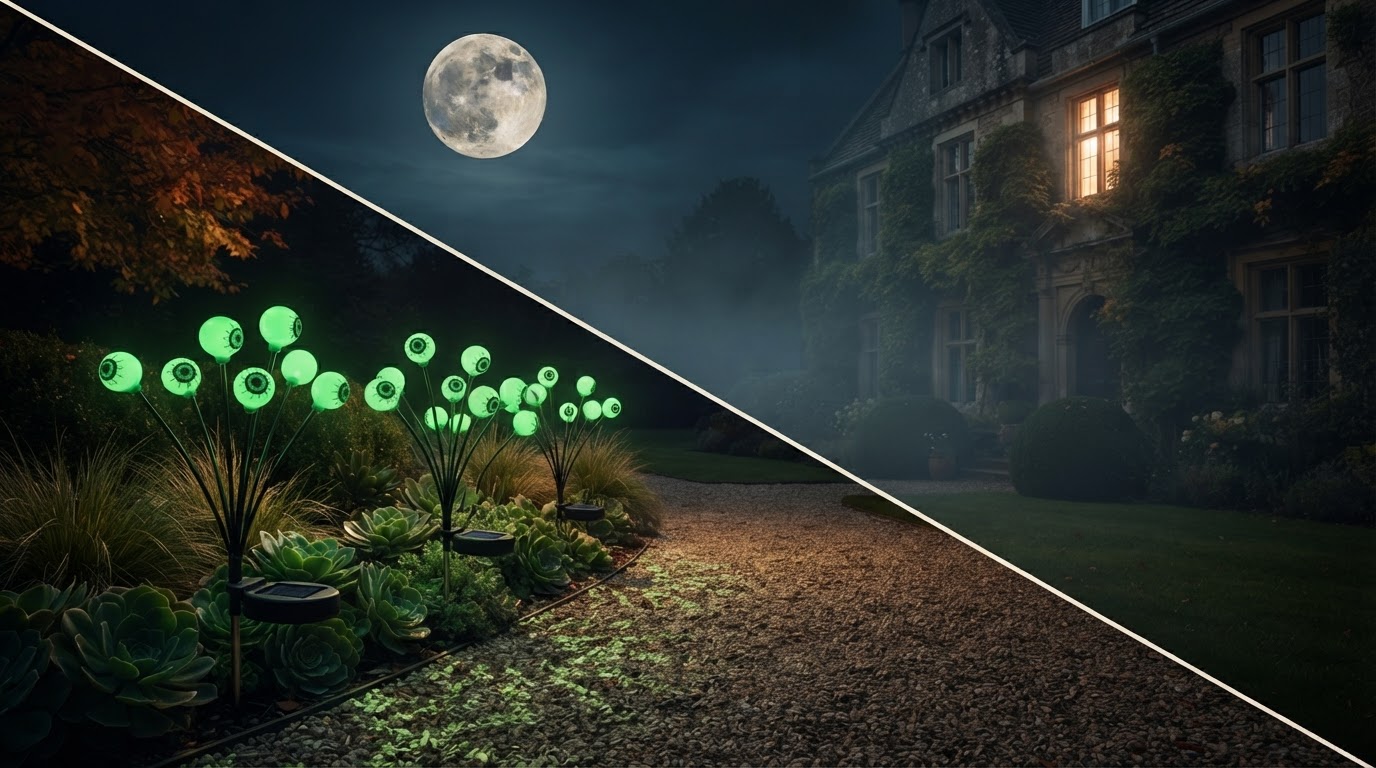
Halloween Eyeball Lights Path Illumination Framework
 Sam VasquezBuying Guide Lead
September 9, 2026 — The seasonal shift toward interactive landscaping has placed Halloween Eyeball Lights at the center of modern exterior design trends. As homeowners move away from static props toward dynamic, glowing eyeball path lights, the demand for reliable outdoor equipment has spiked significantly.
I have spent the last few weeks analyzing how different illumination methods affect the visibility of a walkway. According to data from Google Search Console, outdoor halloween eyeball decorations now generate over 8,000 impressions monthly, signaling a massive shift toward specialized pathway lighting. When you are looking to secure a perimeter, the choice usually comes down to high-lumen LED stakes or maintenance-free solar units. While DIY eyeball wreath lights are gaining traction for doors, they lack the structural integrity required for ground-level path marking.
The 4 Performance Factors
Photo by Plato Terentev on Pexels
When evaluating glowing eyeball path lights, I look at four specific metrics: lumen output, IP rating, battery longevity, and ground coverage. A standard LED purple or green eyeball light typically operates at a lower wattage but provides high-contrast color saturation. In contrast, the solar versions rely on internal chemical storage which can be hit or miss depending on your local cloud cover. For a standard 20-foot walkway, you need approximately six to eight stakes to maintain a continuous visual line. Most commercial-grade Halloween Eyeball Lights feature an IP65 waterproof rating, which is essential if you live in a region prone to October rain or early frost. Runtime is the critical differentiator here; solar units generally offer 6 to 8 hours of illumination after a full day of sunlight, whereas wired LED stakes remain consistent until manually powered down. Search trends for glowing eyeball lawn stakes indicate that consumers are increasingly prioritizing the "swaying" effect of wire-mounted eyeballs over fixed, static bulbs.
Here’s what I’d actually buy: I prefer the solar-powered swaying stakes for their ease of installation and the way they react to wind. Between these two, I’d go with the solar option if your yard gets at least five hours of direct sun. If you’re on a budget, a single set of wired LED eyeballs provides more brightness per dollar spent, even if the setup takes longer. Skip this if you have a heavily shaded yard with dense tree cover, as the solar sensors will fail to trigger the glowing effect consistently.
Expert tip: To maximize the lifespan of your path lights, avoid placing them directly in the path of automated sprinkler systems, as constant high-pressure water can eventually compromise the seals on the eyeball casing, even with a high IP rating.
Integrating these units into a larger display requires planning, especially when coordinating with outdoor halloween solar lights eyeball to ensure color temperature consistency. If you are dealing with uneven terrain, glowing eyeball lawn stakes offer better stability than shallower decorative models. For those managing larger properties, scaling solar halloween eyeball path lights at home requires a strategic layout to avoid dark spots. Proper spacing of solar halloween eyeball path lights ensures that the path remains safe for guests while maintaining the eerie aesthetic.
Selecting the right hardware ensures your display remains functional throughout the entire spooky season without requiring constant adjustment.
Shop Halloween Eyeball Lights.