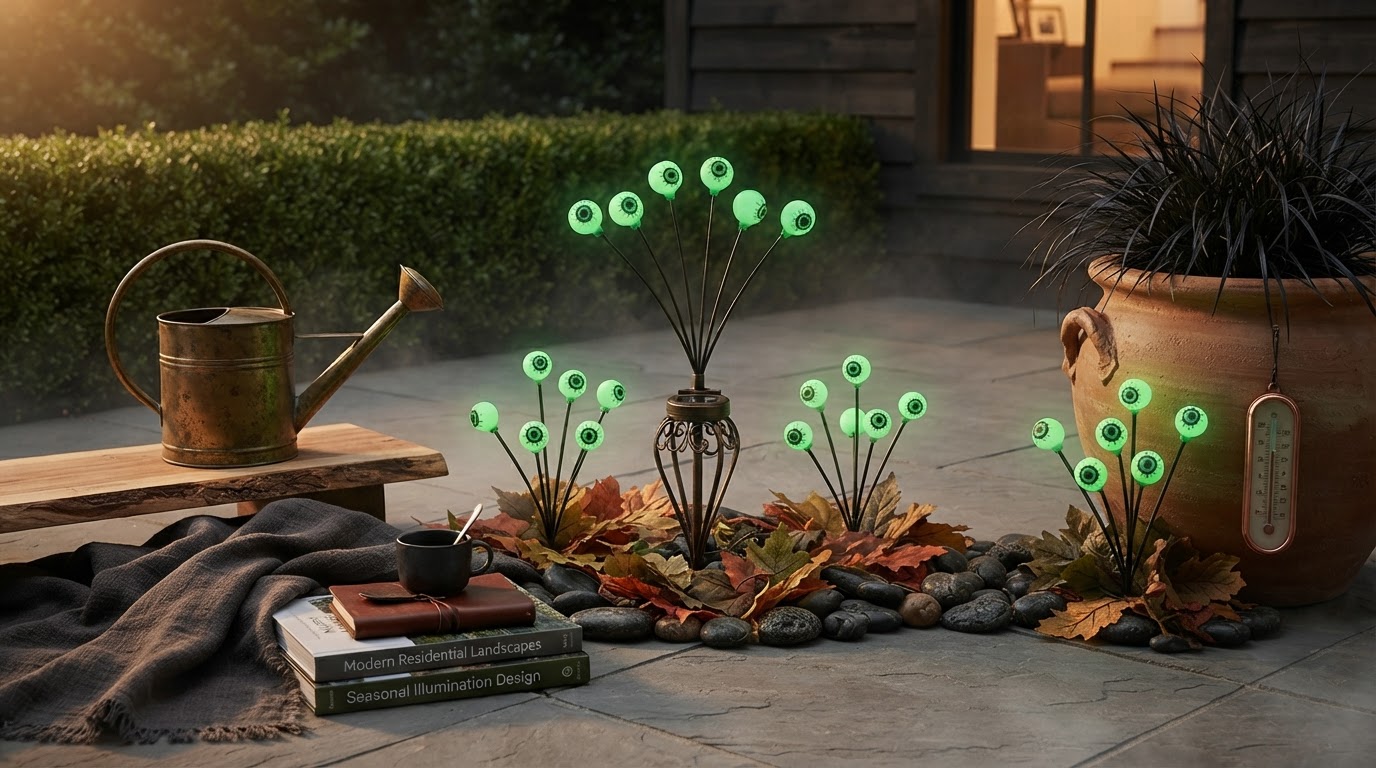
Selecting Halloween Eyeball Lights for Modern Decor
 Priya RamanSenior Analyst
September 15, 2026. This analysis evaluates the functional integration of Halloween Eyeball Lights within residential landscape design. It is intended for consumers seeking to balance aesthetic impact with technical durability in seasonal lighting.
Selecting the right illumination requires a structured approach to environmental variables. The decision rule: prioritize the power source based on geographical exposure and the proximity to high-moisture zones. Think of it as a matrix of durability versus visual fidelity. When evaluating the market, two axes matter here: the degree of automation, such as solar-powered sensors, and the realism of the iris detail. According to Etsy sellers specializing in handmade resin lamps and realistic glass eyes, there is a distinct consumer shift toward high-fidelity anatomical details over traditional cartoonish designs. This shift suggests that the modern consumer views seasonal lighting not just as a temporary accessory, but as a component of a larger, curated outdoor experience. The problem often lies in the lack of cohesion between different lighting types, where a high-intensity LED might wash out the subtle glow of nearby outdoor halloween eyeball decorations.
Halloween Eyeball Lights address these challenges by offering specialized form factors that serve specific zones of the property. For path illumination, glowing eyeball lawn stakes utilize solar energy to provide a consistent, low-heat glow that defines property boundaries without the need for complex wiring. In areas with higher foot traffic or exposure to the elements, waterproof halloween garden eye lights provide the necessary ingress protection to prevent short circuits during autumn storms. Research into search trends reveals a high volume of interest in solar halloween eyeball path lights, reflecting a preference for set-and-forget installations. The technology has evolved to include LED purple and green eyeball lights, which offer a broader spectral range than standard incandescent bulbs. For those managing aquatic features, floating eyeball lights for pool halloween extend the decorative reach into previously dark spaces. These units typically feature weighted bases to ensure the "iris" remains upward-facing, maintaining the intended visual effect even in moving water. Unlike basic string lights, these specialized units are designed to withstand the physical rigors of the outdoor environment while maintaining the "creepy" aesthetic that defines the category.
Once you see it this way, the selection process becomes a matter of matching the specific light delivery system to the architectural constraints of the home. When planning a layout, it is essential to consider the transition from the property line to the front door. The most effective displays often layer different types of outdoor halloween eyeball decorations to create depth. For example, using lawn stakes for the perimeter and string lights for the porch creates a visual hierarchy. However, consumers should be aware of stock limitations for popular items; for instance, Spirit Halloween notes that their blinking eyeball string lights frequently go out of stock due to high demand. For those who prefer a hands-on approach, the DIY Halloween Dollar Store Eyeball Lights method shared by Crafty Lumberjacks on TikTok demonstrates how basic supplies can be transformed into effective eerie decorations. When finalizing a purchase, use the following framework to ensure the hardware meets your specific needs:
- Verify the IP (Ingress Protection) rating for all units intended for lawn or garden placement.
- Assess the solar panel surface area on lawn stakes to ensure adequate charging in shaded areas.
- Confirm the lead wire length for string lights to avoid the need for excessive extension cords.
- Choose LED variants over incandescent bulbs to minimize heat output and energy consumption.
- Coordinate color temperatures between purple, green, and white eyeball units to maintain a consistent palette.
- Evaluate the weight and buoyancy of units intended for pool or pond use.